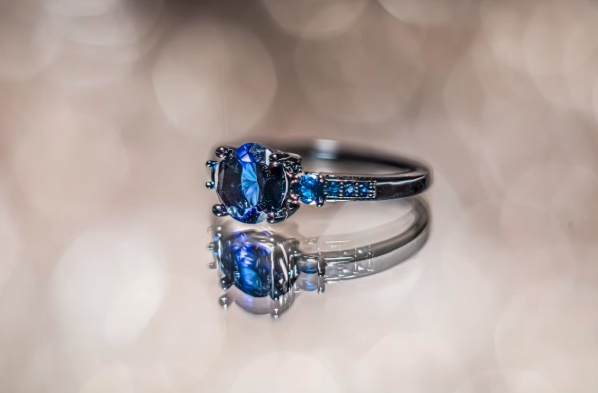
The Diamond Alternative: Why Sapphire Engagement Rings Should Be Your Choice

For the better part of a century, the diamond solitaire has been the unquestioned symbol of engagement. It became the default not because it was the only beautiful option, but because a very effective marketing campaign persuaded several generations that it should be. Weddings today look nothing like they did in that era. Couples are personalising every detail, from the venue to the vows, and many are extending that same instinct to the ring itself. More and more of them are pausing before they follow the old script, and a great number are landing on a stone with just as much history and arguably far more personality: the sapphire.
Britain knows this pull better than most. The most talked-about engagement ring in the country is not a diamond at all. It is a deep blue sapphire encircled by diamonds, first worn by Diana, Princess of Wales, and now on the hand of the current Princess of Wales. That single ring has kept sapphires firmly in the bridal conversation for decades, doing more for the stone than any advertising budget ever could. If you have admired it and wondered whether a coloured gem could work for your own proposal, the answer is a confident yes.
Thinking beyond diamonds? Discover why sapphire engagement rings offer durability, colour, value and real meaning, and how to choose the right one.
Start with the practical question every couple should ask, which is whether the stone can survive daily life. An engagement ring is worn constantly, knocked against desks, door handles and the kitchen sink, so hardness matters more than almost anything else. On the Mohs scale, which measures a gem's resistance to scratching, sapphires sit at nine out of ten. Only the diamond, at ten, is harder. That makes a well-made sapphire ring one of the most hard-wearing pieces of jewellery you can own, far more durable than softer favourites such as emerald or opal that demand careful handling. You can wear it every day for decades and still expect it to hold its brilliance.
A colour that is unmistakably yours
Colour is where sapphires quietly pull ahead. Most people picture the classic velvety blue, and it remains the most popular choice for good reason. But sapphires occur naturally in a remarkable spectrum, including teal, green, golden yellow and the multicoloured parti stones that blend two or more tones within a single gem. Australian sapphires are especially prized for these deeper, more unusual colours. The gemfields of Queensland and New South Wales produce inky blues, forest greens and vivid parti stones found almost nowhere else on earth. Choosing your colour means building a ring that looks like no one else's, rather than another variation on the same clear stone that thousands of other couples have chosen. It is also, invariably, the first thing people ask about.
More ring for your budget
Value is the next reason to take sapphires seriously. Diamonds carry a significant premium that has far more to do with brand and tradition than with genuine rarity. Sapphires, by contrast, generally offer more stone and more presence for the same outlay. A budget that buys a modest diamond might instead secure a larger, more vivid sapphire in a more considered setting, or leave room for a finer band and better craftsmanship. None of that beauty is sacrificed in the process. For couples who would rather invest in the ring itself than in a resale story they will probably never test, that is an easy trade to make.
A stone that means something
Sapphires also carry meaning that suits the moment. Across cultures and centuries the stone has been associated with loyalty, sincerity, wisdom and faithfulness, which is why royalty and clergy wore it long before diamonds captured the bridal market. For an engagement, a symbol of constancy and trust feels far more fitting than a stone chosen mainly because it is expected. There is a quiet romance in selecting a gem whose entire history points towards devotion.
Sourcing you can feel good about
For many couples, where a stone comes from now matters as much as how it looks. Diamond supply chains can be notoriously difficult to trace, and ongoing questions about mining conditions have prompted buyers to ask harder questions. Sapphires can offer a clearer story, particularly Australian stones, which are mined under strict regulation and can often be followed from the ground to the finished piece. Buying from a jeweller that is open about its sourcing, and ideally holds recognised industry accreditation, means the ring carries no uncomfortable footnotes.
How to choose your sapphire
Once you are convinced, a few practical pointers will help you choose well. Decide on colour first, since it shapes the entire look, then turn your attention to the setting. A solitaire lets the stone speak for itself, a halo of small diamonds adds sparkle and makes the centre gem appear larger, and trilogy or cluster designs bring extra intricacy. Be aware that most sapphires are gently heat-treated to enhance their colour, which is a normal and stable practice, although untreated stones command a premium if provenance matters to you. Reassuringly, sapphires are wonderfully low-maintenance. A soak in warm, soapy water and a gentle brush is usually all the cleaning they need, and any reputable jeweller will offer resizing and professional servicing to keep the ring looking its best for a lifetime.
Not a compromise, a choice
Choosing a sapphire is not settling for an alternative to the real thing. It is choosing a stone with deep history, exceptional durability, genuine individuality and honest value, worn by everyone from medieval monarchs to modern royalty. For couples who want an engagement ring that feels truly their own, rather than a decision made for them a lifetime ago by an advertising department, the sapphire is not the compromise. It is the upgrade.