The Bridesmaid Dress Emergency Kit: What to Pack Before the Wedding Day
The dresses have been chosen. The fittings are done. The shoes have been bought, and everyone has promised they will break them in before the big day.
Then the wedding morning arrives.
Someone notices a foundation on a neckline. A hem catches on a heel. A zip feels stiff. A strap starts to loosen just as the photographer is gathering everyone for pre-ceremony photos.
These are not disasters, but they can feel like disasters when there are 20 minutes until the ceremony, and nobody has a needle, stain remover or fashion tape to hand.
That is why every bridal party needs a bridesmaid dress emergency kit. It is simply a small pouch of practical items that can deal with the most common outfit problems quickly, calmly and without sending anyone into town in full hair and makeup.
If you are still choosing bridesmaid dresses, it is worth thinking about fabrics, straps, fit and movement from the start. A well-chosen dress makes wedding-day fixes less likely, and a small emergency kit covers the rest.
Why a Bridesmaid Dress Emergency Kit Matters
Wedding days are long. Bridesmaids may be getting ready early in the morning, standing during the ceremony, walking across grass or gravel for photographs, sitting through dinner, and dancing late into the evening.
Even the best-planned outfit can move, crease, catch or mark during that kind of day.
A dress emergency kit is not about expecting things to go wrong. It is about making sure small problems stay small. A slipping neckline, loose thread or makeup mark can usually be fixed in under a minute if the right item is nearby.
Without it, the same issue can interrupt photos, delay the bridal party or add stress to a morning that is already running to a tight schedule.
Think of it as the fashion version of a first-aid kit. You hope you do not need it, but everyone is relieved when it is there.
Furthermore, one useful tip from bridesmaidwear specialists like Lavetir is to pack the kit around the dress, not around a generic checklist. Satin, chiffon, tulle and crepe all wear differently, and each one needs different fixes.
Fashion Tape
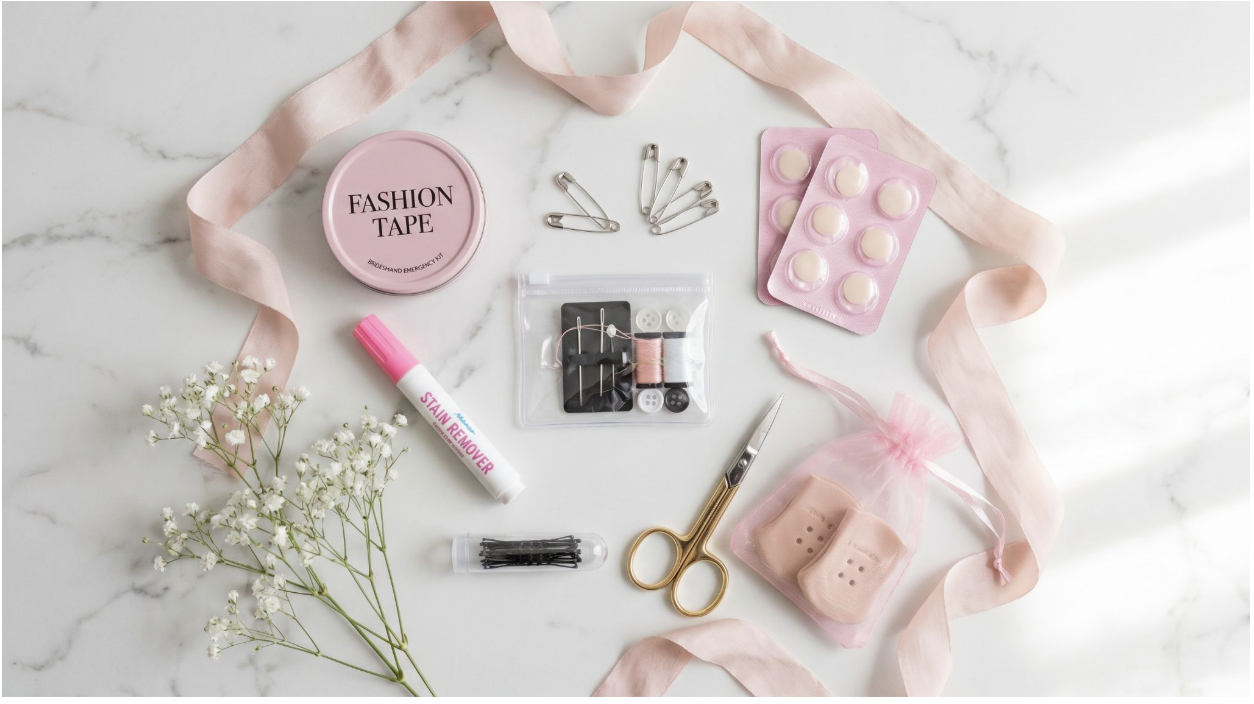
Fashion tape is one of the most useful items in the kit because it solves so many small problems at once.
It can hold a neckline in place, close a small gap in a fitted bodice, stop straps from slipping, secure a wrap dress, or keep fabric sitting neatly during photos. It is especially useful for strapless, one-shoulder, cowl-neck and plunge styles.
Choose double-sided, fabric-safe tape and test it on the inside of the dress before applying it somewhere visible. Use small strips, press firmly, and check the hold before leaving for the ceremony.
For delicate fabrics such as chiffon, satin or tulle, less is usually more. A small piece in exactly the right place is better than several strips that pull at the fabric.
A Stain Remover Pen
Wedding mornings are full of potential stains: foundation, lipstick, coffee, breakfast, perfume, fake tan and bouquets that have been freshly handled.
A stain remover pen is small enough to fit in a clutch, but useful enough to save a dress from a very visible mark. The key is to act quickly.
Blot first, do not rub. Rubbing can spread the stain or push it deeper into the fabric. Use a clean cloth or tissue, apply the stain remover gently, and let the fabric dry before checking the result.
This is particularly important for pale dresses, satin finishes and soft pastel colours, where even a tiny mark can show in natural light.
A Mini Sewing Kit
A mini sewing kit is the item nobody thinks they will need until a strap loosens or a hem starts to drop.
Pack a needle, small scissors, safety pins and thread in a few useful colours: white, nude, black and one shade close to the bridesmaid dresses. You do not need a full sewing box. You just need enough to make a quick, secure repair.
The most common fixes are loose straps, small side seams, fallen hems, missing buttons and threads that need trimming. None of these takes long when the right tools are nearby.
Safety pins are also helpful, but they should be treated as a temporary fix. If there is time to sew a small repair properly, that will usually look better in photos.
A Handheld Steamer
Dresses can look perfect at the fitting and still arrive at the venue with creases from travel, garment bags or being packed too tightly in a car.
A handheld steamer is the quickest way to freshen them before photos. Hang the dress properly, steam from top to bottom, and keep the steamer slightly away from the fabric rather than pressing it directly against the dress.
Chiffon, tulle and satin all need a gentle hand. Too much heat in one spot can leave water marks or affect the way the fabric sits.
The best time to steam is the night before or early on the wedding morning, not ten minutes before walking down the aisle. Give the dresses time to dry fully and settle back into shape.
Heel Protectors
If any part of the wedding takes place outdoors, heel protectors are worth packing.
Grass, gravel, soft ground and old stone paths are not kind to narrow heels. Heel caps help stop shoes from sinking into the ground and make it easier for bridesmaids to walk naturally during photographs and the ceremony.
Pack a few sizes if the bridesmaids are wearing different shoes. Clear heel protectors are the most discreet option and work with most formal footwear.
They are small, inexpensive and easy to forget, but they can make a huge difference at a garden wedding, country house venue or marquee celebration.
Backup Straps
Strapless and delicate-strap dresses can look beautiful, but they also take more adjustment throughout a long day.
A set of clear or neutral adjustable straps can be useful for the reception, especially once the formal photos are done and everyone is moving more freely. They can also help if a strap becomes loose or uncomfortable.
Not every dress will work with backup straps, so check the construction before the wedding day. If the dress has hidden loops or detachable strap points, pack a pair that matches or disappears under the neckline.
It is a small detail, but it can make the difference between enjoying the evening and spending every dance adjusting the dress.
Blister Pads and Comfort Fixes
Dress issues may get the attention, but shoe pain is often what bridesmaids remember most.
Pack blister pads, gel cushions, deodorant wipes and a spare pair of flats or foldable shoes for later in the evening. These items may not affect the dress directly, but they affect how comfortable and confident each bridesmaid feels.
A dress looks better when the person wearing it can stand, walk and dance comfortably. Comfort is part of the outfit, even if it does not show in the photos.
If possible, ask bridesmaids to wear their shoes around the house before the wedding. New shoes on a long day are rarely kind.
Hair and Beauty Backups
A good emergency kit should also include a few beauty basics, because dress problems often happen during touch-ups.
Pack a compact mirror, lipstick, concealer, pressed powder, bobby pins, clear hair elastics and travel hairspray. These help with last-minute photos, wind, happy tears and the general movement of a wedding day.
Keep anything that could stain, such as lipstick or foundation, in a separate small bag inside the kit. That way, if something opens or leaks, it does not end up on the dresses.
Practical Extras
A few non-fashion items are worth adding too.
A phone charger or portable power bank is useful for directions, photos and messages between the bridal party. A small snack can help if the morning runs long. Pain relief, plasters and tissues are also worth including.
Choose snacks that will not stain or crumble everywhere. A granola bar, packet of nuts or plain crackers is safer than chocolate or anything brightly coloured.
The best kit is practical, compact and easy to search through. A clear zip pouch works well because everyone can see what is inside without tipping everything out.
Common Mistakes to Avoid
One common mistake is waiting until the wedding morning to check the fit. Dresses should be tried on again at least a week before the wedding, with the correct shoes and underwear.
Another is steaming too late. Fabric needs time to dry and settle, especially if the dress is made from chiffon or satin.
Do not assume the venue will have what you need. Some venues are well stocked, but most will not have fashion tape, spare straps, heel protectors or thread that matches the dresses.
Finally, do not leave the kit in a hotel room or car once the ceremony begins. Assign one bridesmaid or trusted guest to keep it nearby until after the photos and reception entrance.
Bridesmaid Dress Emergency Kit Checklist
Pack these items into one clear pouch:
- Fashion tape
- Stain remover pen
- Mini sewing kit
- Safety pins
- Small scissors
- Spare buttons
- Clear or neutral backup straps
- Handheld steamer
- Heel protectors
- Blister pads
- Gel shoe cushions
- Flat backup shoes
- Deodorant wipes
- Compact mirror
- Lipstick or lip balm
- Concealer
- Pressed powder
- Bobby pins
- Clear hair elastics
- Travel hairspray
- Tissues
- Pain relief
- Phone charger or power bank
- Water bottle
- Non-messy snack
Check the kit the day before the wedding and make sure everyone knows where it is.
Start With Dresses That Fit Well
An emergency kit is useful, but it should be the backup plan, not the main plan. The best way to avoid dress stress is to choose bridesmaid dresses that fit properly, suit the venue and allow everyone to move comfortably.
That means thinking about fabric, neckline, length and sizing before the wedding day, not trying to solve everything with tape and pins later. If the bridal party includes different body shapes, heights or style preferences, look for options that allow some flexibility while still feeling coordinated.
A well-fitted dress and a small emergency kit are the ideal combination. One helps prevent problems, and the other keeps everyone calm if something unexpected happens.
