Destination Wedding vs UK Castle Wedding Cost: 7 Price Factors Couples Must Compare
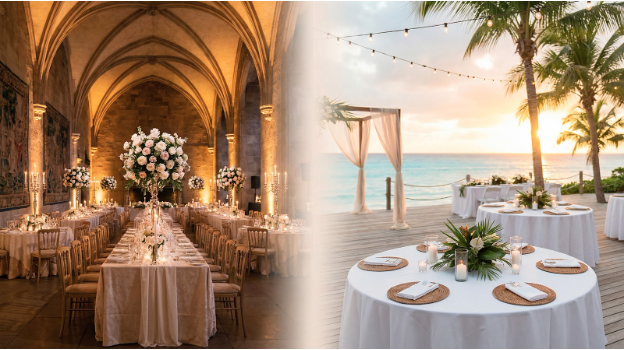
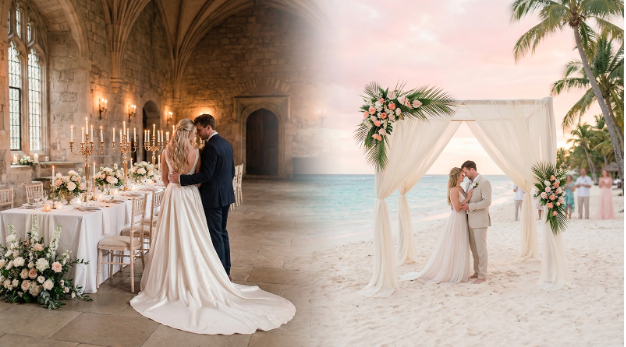
Picture two scenes: silk gowns sweeping ancient stone in a candle-lit great hall, or bare feet in powder-soft sand as the sun slips into turquoise water. For many British couples, cost decides which vision becomes real.
According to wedding platform Hitched, the average UK wedding costs £21,990, while tying the knot overseas averages just £11,099—about 45 percent less. Yet headline numbers hide venue fees, trimmed guest lists, paperwork, and currency swings.
So we’ve distilled the decision into seven practical cost factors and woven in planner insights, helping every pound work harder—wherever you say “I do.”
1. Package deal vs exclusive hire fee
A resort bundle for roughly 30 guests often lands around £5,000–£8,000, while unlocking a UK castle can start at £6,400 before you pay for a single canapé.
Resort packages bundle the essentials. One price secures the ceremony space, bouquet, basic décor, private dinner, and on-site coordinator. Because the hotel already owns chairs, linens, and a sound system, you’re paying wholesale, not retail.
Even mid-range Caribbean resorts pitch full packages in that £5,000–£8,000 range, covering about thirty guests and three courses.
The 2026 pricing guide from Paradise Weddings lists all-inclusive resort packages in Mexico at $1,000–$5,000 USD (about £800–£4,000) for ceremonies under thirty guests.
Paradise Weddings pricing FAQs highlight that many basic packages only include around 20–30 guests, with extra attendees costing roughly $50–$150 per person and separate line items for private venues, upgraded décor, live music and photography. That breakdown shows why medium-sized celebrations with 50–100 guests naturally move into the $8,500–$20,000 bracket once you start adding people and experiences.
Seeing the line-item breakdown clarifies which extras nudge a deal toward the upper end of that £5,000–£8,000 band.
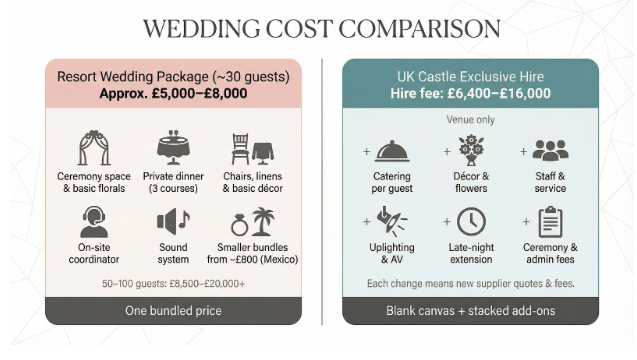
According to listings on Bridebook, Warwick Castle charges £6,400–£16,000 just to hire the venue. Catering, décor, and staff all cost extra. Conservation rules limit external suppliers and restrict setup windows, so every add-on—uplighting, extra chairs, a late-night extension—adds pounds to the invoice.
Packages also spread risk. If rain moves your beach ceremony inside, the hotel team shifts the plan at no extra charge. In a castle, each change triggers a string of separate vendors, and every revision carries its own fee.
Decide early whether you prefer the certainty of one consolidated package or the flexible, but costlier, blank canvas of exclusive hire; your entire budget flows from that choice.
2. Guest count and attendance rate
Guest numbers look simple until you attach real names. They steer every other cost line, and travel distance shifts the math fast.
Invite 100 friends to a castle in the Midlands and most will say yes. They hop in a car or train, and your catering bill climbs with every RSVP. Recent UK data puts the average spend per guest at about £270, so every extra ten diners adds roughly £2,700 to the total.
Send those invitations to Santorini or Saint Lucia and the head count drops. Annual leave, airfare, and childcare mean 20–30 percent of guests politely decline. You might feed 40 people instead of 80, trimming thousands from food, drink, and chair hire.
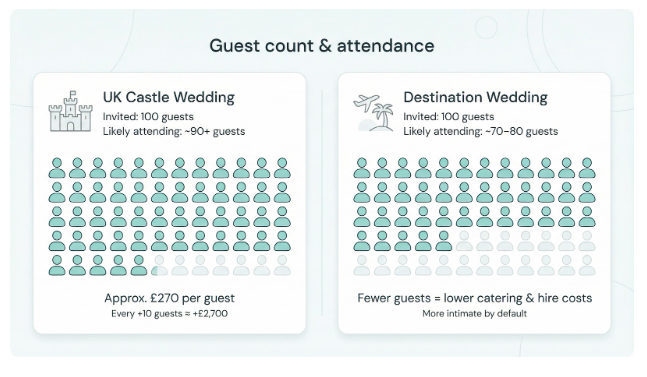
Cost is not the only lever. Fewer guests lift intimacy. If you picture a single table where every face carries a story, an overseas venue delivers that by default. If you imagine a packed dance floor and three generations in one photo, a UK castle keeps attendance high and travel hassle low.
Fix your target head count early. Once the number is set, the rest of the budget can follow it instead of guessing.
3. Travel and accommodation costs
Flights and hotel nights look simple until you open a spreadsheet. They decide who pays what, who feels valued, and whether your honeymoon fund stays intact.
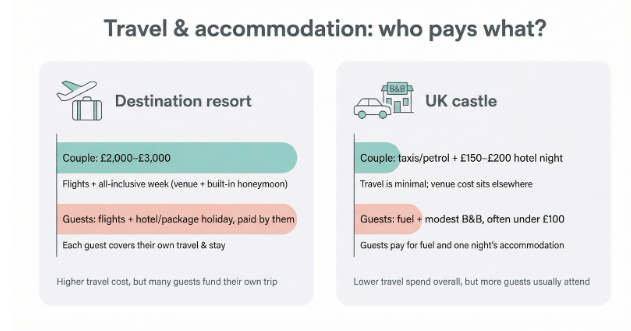
For the couple, a week in an all-inclusive Caribbean resort plus economy flights for two often sits around £2,000–£3,000. The spend covers both venue and built-in honeymoon, so it feels efficient. Swap the beach for a British castle and travel drops to taxi fares or a tank of petrol, maybe £150–£200 for a nearby hotel if you want breakfast with family.
Guests face a different equation. At home, an aunt from Manchester covers fuel and a modest B&B, joining the party for under £100. Ask her to fly overseas and she sees a package-holiday price. Most guests fund their own travel, and many welcome the sun break, yet long-haul tickets naturally trim the list and move expenses away from the couple.
Generosity still counts. Couples might pay airport transfers for parents or host a group catamaran cruise as thanks. For a castle wedding, the parallel gesture is a coach from the station or a pre-booked hotel block with a discount code. Both ideas feel thoughtful without stretching the budget.
Lock the destination and dates early, then share booking tips in the save-the-date. Clear, timely info lets guests track deals and shields your numbers from late-season airfare spikes.
4. Catering and drinks
Food is where budgets swell or stay sane. A castle caterer often charges about £100 per guest for a three-course meal with fizz on arrival and half a bottle of wine. Add an evening buffet and the number climbs again. Double the guest list and you double the spend.
Destination resorts flip the script. Because guests already pay for all-inclusive stays, the kitchen is running either way. Most wedding packages fold in a semi-private dinner and basic bar service for the first two or three dozen diners. Beyond that, you usually pay a modest setup fee rather than a full meal price, so it feels like you’re topping up, not starting from scratch.
Alcohol follows the same pattern. A castle bar means wholesale wines and corkage clauses, so couples either cap free drinks or watch the bill grow with every clink. On a beach resort, cocktails flow under the hotel’s umbrella; the only upgrade might be a chilled bottle of Champagne for the toast.
Quality still matters. If you want a Michelin-style tasting menu or rare vintage Bordeaux, a UK caterer can deliver that artistry, but at a premium. If your dream is jerk chicken under fairy lights, a Caribbean chef has both the edge and the ingredients.
The rule is simple: calculate the true per-head cost, not just the package headline, then decide where flavour, presentation, and bar generosity balance against the bottom line.
5. Décor, styling and venue ambiance
Venue character decides whether you spend pounds or pennies on looks.

Castles already deliver drama. Vaulted ceilings, stone arches, and roaring fireplaces make every photo feel like a period film set. Because the backdrop carries weight, you can keep florals simple and still impress guests. Scale cuts both ways, though. A hall built for medieval banquets can dwarf modest centerpieces, so couples often add uplighting, tall arrangements, or custom linens. Those extras can add £1,500–£3,000 for labour, delivery, and break-down.
Beach or garden resorts lean on nature. A palm-lined aisle and a sunset backdrop need little help to shine. Standard packages usually include a floral arch, chair sashes, and table flowers sourced locally. Special requests such as out-of-season peonies, crystal chandeliers under a marquee, or imported charger plates push costs up because everything travels in, sometimes across oceans.
Rules influence the bill. Heritage sites protect ancient walls, so décor teams face strict attachment points and tight install windows, which means more staff hours and, often, venue-approved suppliers. Resorts own their infrastructure, so staff can tweak layouts at the last minute without penalty.
The lesson is simple: if you picture hanging gardens and neon signs, budget extra for a castle; if you prefer relaxed elegance and let the landscape speak, the destination décor stays gentle on your wallet.
6. Vendors and coordination
Behind every photo-worthy moment stands a small army of professionals. How you recruit that army, locally or overseas, decides both cost and convenience.
Book a castle and you tap into one of the largest talent pools in Europe. Photographers with fine-art portfolios, harpists, street-food vans, fireworks crews—you can find them all within driving distance of the M25. Choice boosts quality, yet every extra specialist adds mileage, accommodation, and a new line on your invoice. A full-service planner can ask £1,500–£4,000; skip the planner and you inherit their phone-ringing workload.
Resort packages keep the team compact. An in-house coordinator, resident photographer, and DJ who already knows the venue sockets come baked in. Swap the house photographer for your trusted UK pro and the resort may charge an outside-vendor fee of £300–£500 plus flights and rooms, so the simplicity fades.
Expertise also shifts with climate. British suppliers know local licences, weather plans, and how to load gear through narrow castle doors. Overseas teams master heat-proof makeup, sunset lighting, and fast floral refreshes in tropical humidity. Match vendor strengths to the setting and you often save stress and cash.
The rule is alignment. If you crave a specific photographer’s editorial style or a quartet that plays your grandparents’ song, budget for their travel or keep the wedding close to home. If you prefer one contract and fewer emails, lean on the resort’s built-in network. Clear priorities keep the budget honest.
7. Legal requirements and hidden fees
Paperwork rarely appears in glossy mood boards, yet it decides whether your signatures stick and how many zeros land on the bill.
Start local. In England you give notice at the register office, pay a modest fee, then invite registrars to the castle. Their travel and ceremony service often top about £500, a figure that usually includes the legal certificate and wraps up the bureaucracy.
Abroad, the rules change with the latitude. Many countries want passports translated, birth certificates apostilled, or a sworn single-status declaration filed days before the ceremony. Each stamp or solicitor visit costs tens of pounds; stack them and the total nudges into the hundreds. Some couples skip the hassle by marrying at the local registry office first and holding a symbolic beach service later. Simple, valid, budget-friendly.
Fees hide in other corners too. Resorts add 10–15 percent service charge to extras. Castles quote prices inclusive of VAT, but outside suppliers may list plus-VAT in small print. Currency conversions skim a little more every time you pay an overseas invoice, and a 5 percent swing in the exchange rate can erase last month’s bargain.
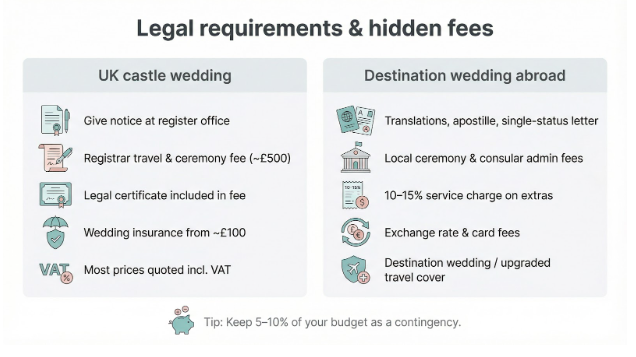
Insurance is the final guardrail. A UK wedding policy that covers supplier no-shows and venue mishaps costs around £100. Standard travel coverage won’t refund a washed-out beach ceremony, so upgrade to a destination policy that will.
Set aside a contingency of 5–10 percent of your target spend; that cushion turns surprise costs into shrugged shoulders rather than sleepless nights.
Quick cost comparison: 50 guests vs 100 guests
Big numbers feel friendlier when you see them side by side. Use this table as a starting point, then replace the placeholders with quotes from your own venues.
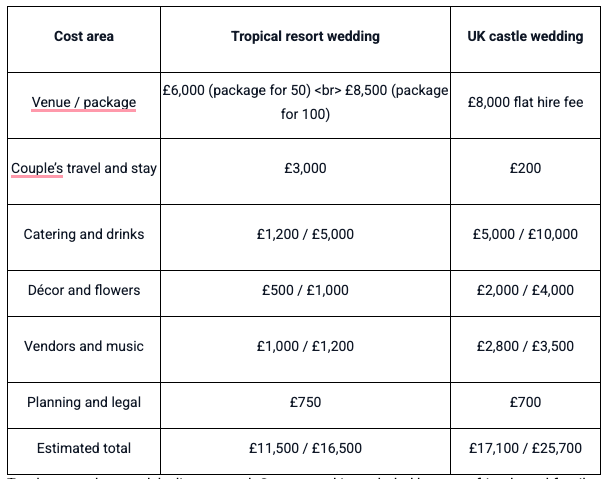
Totals cover the couple’s direct spend. Guest travel is excluded because friends and family usually pay their own way.
Conclusion
The lesson is clear. When head count stays lean, destination savings shine. Push numbers toward one hundred and costs begin to converge, especially once you layer in upgrades, specialist vendors, and the impact of exchange-rate swings.
Ultimately, the smarter option is the one that aligns your guest list, priorities, and tolerance for planning complexity—not just the headline price. When couples decide early what truly matters, both a sun-drenched resort and a storied UK castle can deliver exceptional value.
Whether you picture vows framed by palm trees or ancient stone walls, clarity beats comparison. Fix your guest numbers, understand what’s included, and budget for the hidden extras—and whichever setting you choose, your money will work harder for the moments that matter most.
Frequently Asked Questions
1. Is a destination wedding always cheaper than a UK castle wedding?
No. Destination weddings tend to cost less only when guest numbers stay low. As head counts rise and couples add private venues, décor upgrades, and extra events, costs can quickly approach or match a UK castle wedding.
2. How many guests typically attend a destination wedding?
Most destination weddings host 30–60 guests, largely because travel time, airfare, and annual leave reduce attendance. This smaller turnout is one of the biggest reasons destination weddings can cost less overall.
3. Do couples usually pay for guests’ travel and accommodation abroad?
Generally, no. Guests typically cover their own flights and hotel stays, much like a holiday. Couples may choose to subsidise key family members or offer group activities, but this is optional rather than expected.
4. Are legal requirements more expensive for overseas weddings?
They can be. Some countries require document translations, apostilles, or in-person appointments, which add costs and time. Many couples reduce complexity by completing a legal ceremony in the UK and holding a symbolic celebration abroad.
5. Which option is easier to plan: a destination wedding or a UK castle wedding?
Destination weddings often feel simpler because many services are bundled into one package with an on-site coordinator. UK castle weddings offer more creative freedom but usually involve coordinating multiple suppliers, which increases both workload and cost.